
Last verified: September 17, 2026
TL;DR
A buyer researching a purchase today often asks an AI assistant a question before they ever type a company name into a search bar, and whatever that assistant says becomes their first impression of every brand in that category. Most companies have no idea what these systems are saying about them, whether it's accurate, or whether a competitor is getting named instead. That blind spot is quietly shaping deals, and nobody's tracking it the way they track a website or a search ranking.
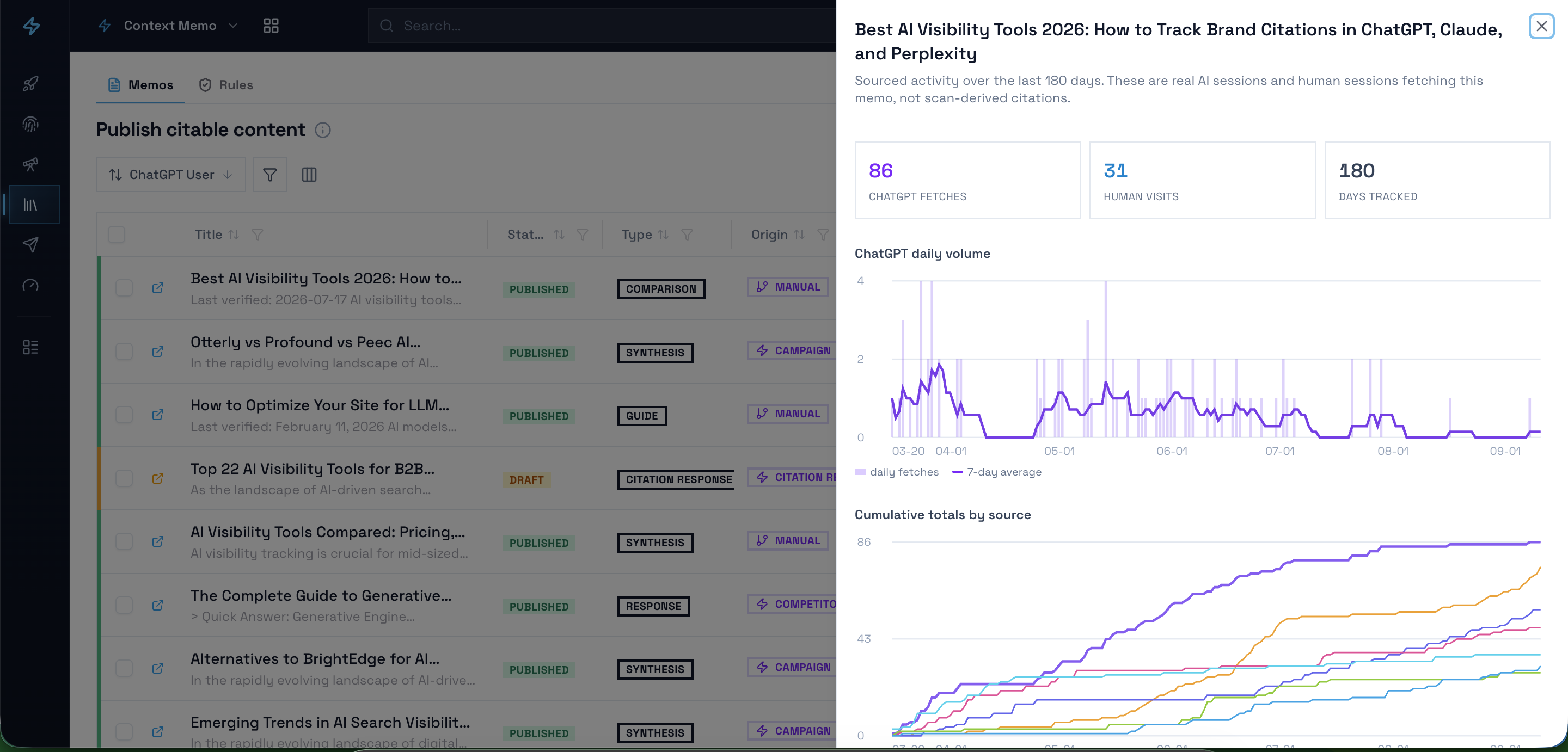
Dashboard showing AI visibility tools metrics and trends.
Why Are Buyers Asking AI Assistants Instead of Searching?
Buyers have started treating AI assistants like a research shortcut, not a novelty. Instead of typing a query into a search engine and clicking through five or six links, someone evaluating a vendor now just asks ChatGPT, Claude, Perplexity, or Gemini a direct question: "what's the best tool for X," "how does Y compare to Z," "is this company any good." The assistant reads across the web, pulls what it can verify, and hands back one answer.
That's the part that changes everything. A search engine gives you ten blue links and lets you decide. An AI assistant gives you one synthesized paragraph and expects you to trust it. There's no page two, no scrolling past a result you don't like. A brand is either in that paragraph or it simply isn't part of the conversation, and the buyer usually never knows what got left out.
This shift didn't happen because brands did anything wrong. It happened because the interface changed. The content that used to compete for a click now competes for inclusion in a single generated response, and most of what companies have published over the last decade was never built with that in mind.
How Does an AI Model Decide Which Brand to Mention?
The model isn't ranking pages, it's extracting facts. That's the single biggest thing to understand here, and it's also the thing most marketing teams get wrong when they assume their existing SEO content will just carry over.
When a model answers a buyer's question, it's pulling from whatever content it can parse cleanly and treat as reliable: clear claims, defined terms, specific comparisons, dated and sourced information. A page full of vague brand language, marketing adjectives, and no concrete facts doesn't give the model much to extract. It might still crawl the page, but it has nothing citable to pull out of it, so it either skips the brand or fills the gap with whatever thin, secondhand mention it finds elsewhere, like a review site or a forum post from three years ago.
This is why a company can rank on page one of a traditional search engine and still be invisible, or badly misrepresented, in an AI-generated answer. The two systems reward different things. One rewards authority and backlinks. The other rewards content that reads like a fact sheet a model can trust and repeat.
What Happens When the Model Gets the Facts Wrong?
When an AI assistant doesn't have clean, current information about a brand, it doesn't just stay quiet. It fills in the blanks, and it does so confidently, with no disclaimer that it's guessing. That's arguably worse than being left out entirely.
A model might describe a company's pricing structure incorrectly, attribute a feature to the wrong vendor, or compare two brands using outdated positioning that neither company has used publicly in a year. Because the answer is delivered in a single authoritative-sounding paragraph, most buyers have no reason to question it. There's no visible source list to sanity-check, no second opinion sitting right next to it the way competing search results used to provide.
And once a wrong claim gets repeated across enough queries, it tends to stick. Models are trained and retrieved from content patterns, so an inaccurate description that shows up often enough starts to look, from the outside, like consensus. Correcting it isn't as simple as emailing a reviewer or updating a listing. It usually means the brand has to publish something clear and specific enough, in enough places, that the correct version starts outweighing the wrong one in whatever the model is pulling from.
What This Blind Spot Actually Costs
The real cost isn't abstract, it's a deal the company never knew it was in. A prospect asks an assistant for a recommendation, gets three names, and builds a shortlist before anyone from any of those companies has a clue the conversation happened. If a brand wasn't one of the three names, there's no bounce rate to notice, no abandoned form to follow up on. The loss doesn't show up in any dashboard marketing or sales is currently watching.
That invisibility compounds in a few specific ways worth naming directly:
- Sales teams fight misconceptions they can't see coming. A prospect walks into a call already holding a wrong idea about pricing or a missing feature, and the rep has no idea where that idea came from until the deal is already sideways.
- Competitors get named by default, not by merit. If a competitor's content happens to be more fact-dense or better structured for extraction, the model may cite them more often even when the underlying product isn't stronger, simply because their content gives the model more to work with.
- The gap widens quietly over time. AI assistants re-crawl and re-synthesize content on their own schedule. A company that never checks in on how it's being described has no way to notice the gap growing until it shows up as a pattern in lost deals, which by then is a lagging signal, not an early one.
None of this requires a company to have done anything careless. It's simply a byproduct of publishing content built for an older kind of discovery while buyers have already moved on to a newer one.
Frequently Asked Questions
How can a company check what AI assistants are saying about it?
The most direct method is asking the actual questions a buyer would type, across a few different assistants, and reading the answers plainly rather than assuming a single check tells the whole story. Since these systems are queried live, the same question can return a different answer a week later, so a one-time check only shows a snapshot, not a trend.
Does fixing SEO also fix AI visibility?
Not automatically. Traditional SEO optimizes for ranking and crawlability, while AI visibility depends on whether a model can extract clear, verifiable facts from a page and trust them enough to repeat. The two efforts often use the same source content, but they're solving different problems, and content built purely for keyword ranking can still fail to produce a usable answer for a model.
Who inside a company usually notices this problem first?
It tends to surface unevenly. Sometimes it's a founder who happens to ask an assistant about their own company and doesn't recognize the description that comes back. Other times it's a sales rep who keeps hearing the same wrong objection on calls and can't trace where it originated. Rarely does it show up through a formal process, mostly because most companies haven't built one yet.