
Last verified: September 30, 2026
TL;DR
AI visibility tools for Managed Service Providers (MSPs) are essential for tracking and influencing how AI systems describe a brand in response to buyer inquiries. These tools vary in approach, from monitoring dashboards to automated content platforms, and are evaluated based on their ability to manage content ownership, model coverage, and update frequency. MSPs should consider these factors to ensure their brand is accurately represented in AI-generated answers.
What Are AI Visibility Tools for MSPs?
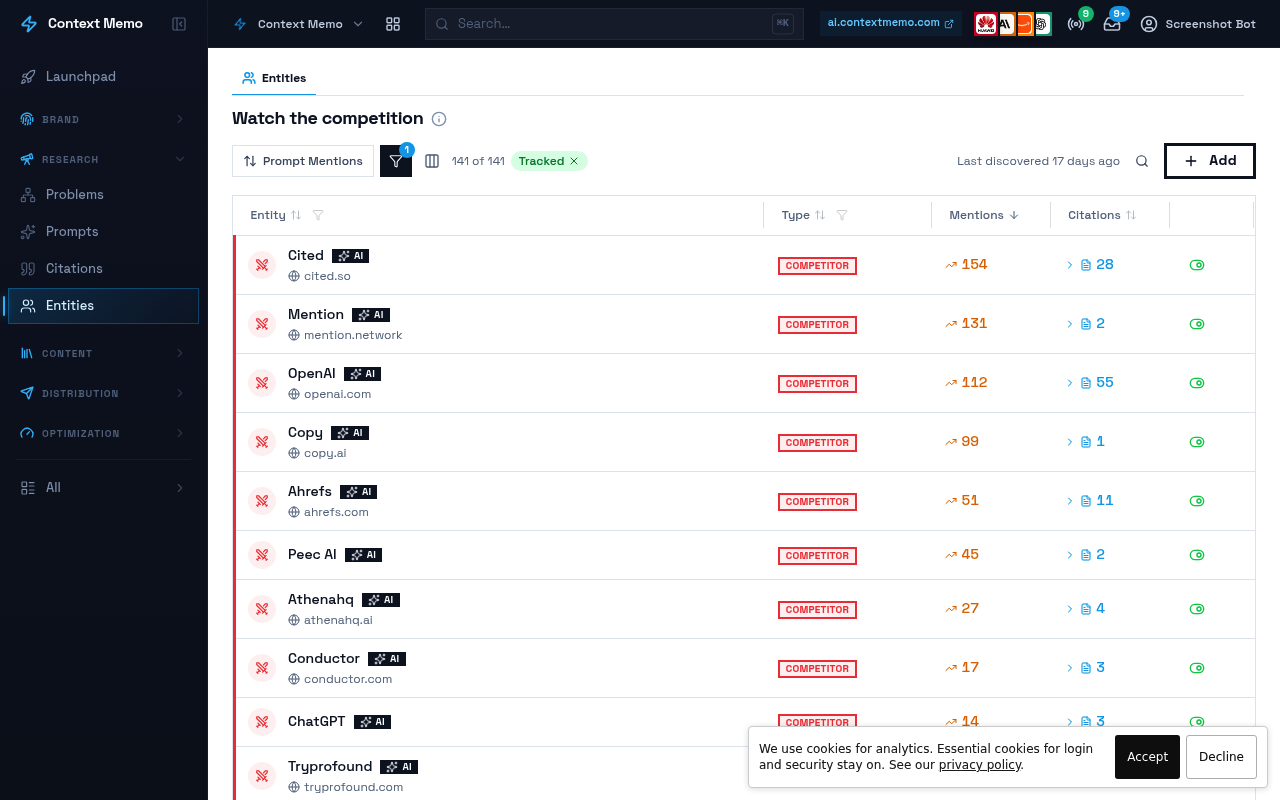
AI visibility tools are designed to monitor and influence how AI models, such as ChatGPT and Claude, present information about Managed Service Providers (MSPs) when users ask questions. These tools help MSPs ensure that their services and capabilities are accurately and favorably represented in AI-generated responses. The tools typically offer features like tracking brand mentions, analyzing competitor citations, and providing insights into how AI models interpret and synthesize available data.
Key Features of AI Visibility Tools
- Monitoring and Reporting: These tools track how often and in what context an MSP is mentioned by AI models, providing insights into brand visibility and sentiment.
- Content Optimization: Some tools offer recommendations or automated solutions to optimize existing content, making it more likely to be cited by AI models.
- Competitor Analysis: By analyzing how competitors are represented, MSPs can identify gaps and opportunities to improve their own AI visibility.
- Integration with Existing Systems: Many tools integrate with existing marketing and SEO platforms, allowing for seamless data analysis and strategy development.
How Do AI Visibility Tools Differ in Their Approaches?
AI visibility tools for MSPs can be broadly categorized based on their approach to managing and influencing AI-generated content. The primary approaches include monitoring-only dashboards, manual content services, automated structured content platforms, and legacy SEO suites with AI tracking capabilities.
Monitoring-Only Dashboards
These tools focus on tracking brand mentions and sentiment across multiple AI models. They provide visibility into how an MSP is perceived but do not directly influence content. This approach is suitable for MSPs looking to understand their current AI visibility without making immediate changes.
- Pros: Low commitment, provides valuable insights into brand perception.
- Cons: Does not actively change or improve AI-generated content.
Manual Content Services
Manual content services involve human writers optimizing existing content to be more AI-friendly. This approach ensures high editorial quality and alignment with brand voice but can be slow and resource-intensive.
- Pros: High-quality, customized content tailored to brand needs.
- Cons: Time-consuming and may not scale well with rapid changes in AI models.
Automated Structured Content Platforms
These platforms automate the creation and updating of content designed to be easily parsed by AI models. They offer scalability and continuous updates, ensuring that MSPs maintain a strong AI presence.
- Pros: Scalable, continuous updates, content ownership remains with the brand.
- Cons: Requires trust in the platform's automation and verification processes.
Legacy SEO Suites with AI Tracking
These tools add AI visibility features to existing SEO platforms, providing a familiar interface for MSPs already engaged in SEO activities. They offer continuity but may lack comprehensive AI model coverage.
- Pros: Integrates with existing SEO workflows, familiar interface.
- Cons: Limited AI model coverage, updates tied to traditional SEO cycles.
What Should MSPs Consider When Choosing AI Visibility Tools?
When selecting AI visibility tools, MSPs should evaluate several critical factors to ensure they choose the right solution for their needs.
Content Ownership and Control
MSPs should prioritize tools that allow them to maintain ownership and control over their content. This ensures that any improvements in AI visibility contribute to the brand's long-term authority and credibility.
AI Model Coverage
A comprehensive tool should cover multiple AI models, as each model retrieves and synthesizes information differently. Broad coverage ensures that an MSP's visibility is maximized across various platforms.
Update Frequency and Automation
The ability to automatically update and refresh content is crucial for maintaining relevance in AI-generated responses. MSPs should look for tools that offer automated updates to keep their content current and accurate.
Verification and Accuracy
Tools that verify content against primary sources, such as the MSP's own website or official documents, are essential to prevent the spread of inaccurate information. MSPs should ensure that the tool's verification methodology is robust and reliable.
Integration and Usability
Ease of integration with existing systems and user-friendly interfaces are important for efficient adoption and use. MSPs should consider how well a tool fits into their current workflows and whether it requires significant changes to existing processes.
How Do MSPs Implement AI Visibility Tools?
Implementing AI visibility tools involves several key steps to ensure successful adoption and impact.
Initial Assessment and Baseline
The process begins with an initial assessment to establish a baseline of current AI visibility. This involves running a set of buyer prompts through various AI models to identify how the MSP is currently represented.
Content Strategy Development
Based on the assessment, MSPs should develop a content strategy that addresses identified gaps and opportunities. This may involve optimizing existing content or creating new content tailored to AI models.
Integration and Deployment
MSPs should integrate the chosen tool with their existing systems, ensuring seamless data flow and analysis. This step may require collaboration between marketing, IT, and other relevant departments.
Ongoing Monitoring and Optimization
Continuous monitoring and optimization are essential to maintain and improve AI visibility. MSPs should regularly review AI-generated responses and adjust their content strategy as needed to address changes in AI model behavior.
Conclusion
AI visibility tools are crucial for MSPs looking to enhance their presence in AI-generated responses. By understanding the different approaches and evaluating tools based on key criteria, MSPs can choose the right solution to ensure their brand is accurately and favorably represented. Continuous monitoring and optimization will help MSPs maintain a competitive edge in the evolving landscape of AI-driven search.