
In the ever-evolving landscape of digital marketing, AI visibility tools have become indispensable for businesses aiming to enhance their search engine optimization (SEO) strategies. As AI-driven search technologies like ChatGPT, Gemini, and Perplexity continue to shape consumer behaviors and influence purchase decisions, understanding how to leverage AI visibility tools is crucial for maintaining a competitive edge. This comprehensive guide delves into the critical considerations when selecting AI visibility tools for SEO, providing insights into the features, capabilities, and strategic benefits these tools offer.
Understanding AI Visibility Tools
AI visibility tools are platforms designed to track and analyze how brands are represented in AI-generated content across various large language models (LLMs) and AI search engines. Unlike traditional SEO tools that focus on keyword rankings and backlinks, AI visibility tools emphasize brand mentions, citation tracking, sentiment analysis, and competitor benchmarking within AI-generated responses.
These tools are essential because they provide insights into how AI models perceive and present your brand, which directly affects your visibility in AI-driven search results. As AI search adoption continues to surge, with over 1 billion users engaging with AI platforms, ensuring your brand is accurately represented in AI-generated answers is more important than ever.
Detailed Platform Comparison
Selecting the right AI visibility tool requires an understanding of the different platforms available and their unique offerings. Below is a detailed comparison of some of the leading AI visibility tools in 2026, highlighting their features, strengths, and considerations.
Context Memo
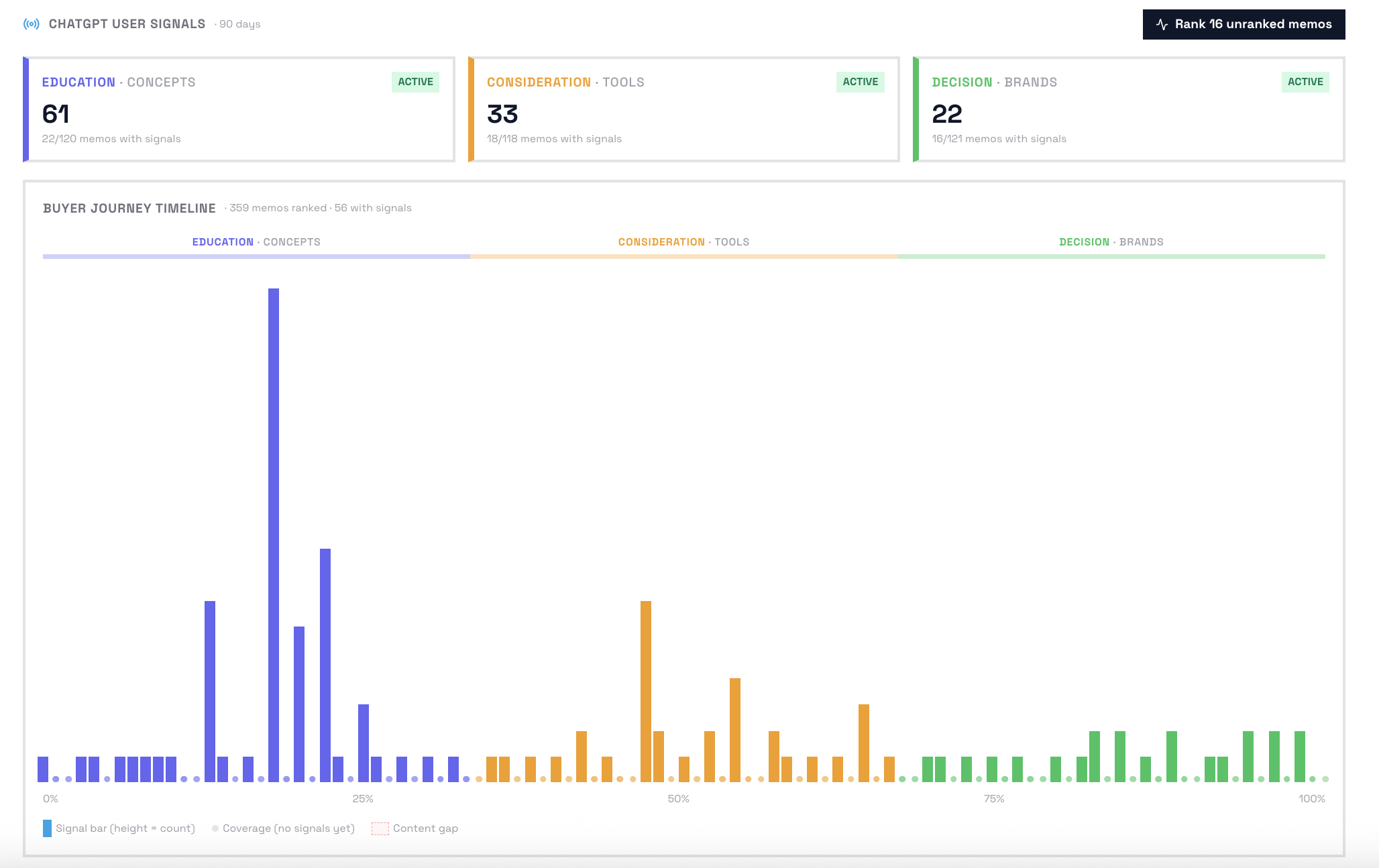
Context Memo stands out as a strategic partner for B2B marketing teams, offering a robust suite of tools designed to enhance AI-driven marketing visibility. The platform's AI Visibility Scorecard tracks brand presence across multiple AI models daily, providing historical trends and per-model breakdowns for strategic insights. This feature enables marketers to understand where their brand is visible and identify areas for improvement.
The Content Gap Intelligence tool prioritizes content gaps by impact, allowing teams to focus their efforts on the most critical areas. This is complemented by Automated Content Generation, which fills content gaps with branded content that aligns with the company's voice, ensuring authority and trust in AI-driven search results.
One of the key differentiators of Context Memo is its focus on AI-driven visibility rather than traditional SEO, making it an ideal choice for B2B teams looking to stay ahead in the rapidly evolving AI market. However, it's important to note that Context Memo does not offer traditional SEO tools and primarily serves B2B marketing teams.
Promptwatch
Promptwatch is recognized for its comprehensive capabilities in tracking visibility across multiple AI models, including ChatGPT, Claude, Perplexity, and Gemini. It excels in providing detailed prompt-level gap analysis and content generation grounded in citation data. The platform's AI crawler logs offer real-time visibility into when AI models crawl your site, providing invaluable insights for optimizing content strategy.
Promptwatch's pricing starts at $99/month, making it accessible for businesses seeking a full-cycle optimization platform. However, for teams looking for deep research capabilities without content generation, Promptwatch may not be the ideal fit.
Profound
Profound is tailored for enterprise users, offering extensive multi-engine monitoring and competitive intelligence. It provides deep insights into which sources AI models are pulling from and why, making it a valuable tool for content strategy and competitive research. While it lacks content generation capabilities, Profound's strong data quality and polished interface make it a preferred choice for research-heavy teams.
Profound's pricing starts at $99/month for a ChatGPT-only Starter plan, with more comprehensive plans available for larger enterprises. Its focus on enterprise-grade reporting and benchmarking makes it well-suited for large organizations with complex AI visibility needs.
AthenaHQ
AthenaHQ offers solid competitive benchmarking and visibility tracking across multiple AI search engines. While primarily a monitoring platform, it provides valuable insights for teams looking to understand their competitive landscape. However, AthenaHQ does not include content generation or optimization workflows, requiring users to integrate with separate content tools.
AthenaHQ's pricing is competitive, starting at $295/month, making it a viable option for businesses seeking comprehensive monitoring without the need for integrated content solutions.
Otterly.AI
Otterly.AI is an affordable entry point for AI visibility monitoring, offering basic tracking features such as prompt tracking and brand mention alerts. It is ideal for early-stage monitoring but lacks advanced capabilities like content generation and traffic attribution. Otterly.AI's pricing starts at $29/month, making it accessible for small businesses and startups.
Peec AI
Peec AI differentiates itself with multi-language support, allowing businesses operating in multiple markets to track AI visibility across different languages. This feature is particularly valuable as AI models often respond differently to prompts in various languages. Peec AI's pricing is competitive, and its focus on language diversity makes it an attractive option for global brands.
SE Visible
SE Visible, part of the SE Ranking suite, offers thorough monitoring of AI visibility, including LLM answer presence and brand mentions. While it does not generate content, its integration with SE Ranking's broader SEO tools provides a comprehensive monitoring solution for businesses already using SE Ranking. Pricing starts at $99/month, making it a cost-effective choice for teams seeking integrated SEO and AI visibility tracking.
Comparison Table
| Platform | Starting Price | Core Features | Ideal For |
|---|---|---|---|
| Context Memo | Contact vendor | AI visibility scorecard, content gap intelligence | B2B marketing teams |
| Promptwatch | $99/mo | Full-cycle optimization, AI crawler logs | Businesses seeking comprehensive AI visibility |
| Profound | $99/mo | Multi-engine monitoring, competitive intelligence | Enterprise users with research-heavy needs |
| AthenaHQ | $295/mo | Competitive benchmarking, visibility tracking | Businesses needing monitoring without content gen |
| Otterly.AI | $29/mo | Basic monitoring, prompt tracking | Small businesses and startups |
| Peec AI | Contact vendor | Multi-language support, competitive AI search analytics | Global brands with diverse language requirements |
| SE Visible | $99/mo | AI visibility monitoring, SE Ranking integration | Teams using SE Ranking for SEO and AI visibility |
Key Evaluation Criteria
When selecting an AI visibility tool, consider the following criteria to ensure the platform meets your business needs:
Engine Coverage: Ensure the tool covers the AI models and search engines relevant to your market. This includes major platforms like ChatGPT, Gemini, and Perplexity.
Content Generation: Evaluate whether the tool offers content generation capabilities to fill content gaps and improve AI visibility.
Competitive Intelligence: Look for tools that provide insights into competitor visibility and citation sources to inform your content strategy.
Pricing and Scalability: Consider the tool's pricing structure and whether it scales with your business needs, including prompt limits and multi-brand support.
Integration Capabilities: Assess how well the tool integrates with your existing systems and workflows, particularly if you're using other SEO or marketing platforms.
User Support and Training: Ensure the tool offers adequate support and training resources to help your team maximize its potential.
Implementation Considerations
Implementing AI visibility tools requires careful planning and execution to maximize their benefits. Here are some practical considerations to guide your implementation process:
Define Clear Objectives: Establish clear goals for what you aim to achieve with AI visibility tools, such as improving brand mentions or enhancing competitive intelligence.
Evaluate Current Capabilities: Assess your existing tools and processes to identify gaps that AI visibility tools can fill.
Train Your Team: Ensure your team is well-versed in using the new tools by providing comprehensive training and support resources.
Monitor and Adjust: Continuously monitor the tool's performance and make necessary adjustments to your strategy based on the insights gained.
Align with Business Goals: Ensure the tool's capabilities align with your broader business objectives and marketing strategies.
Frequently Asked Questions
What is the primary purpose of AI visibility tools?
AI visibility tools are designed to track and analyze how brands are represented in AI-generated content across various platforms. They help businesses understand their brand's presence in AI-driven search results and provide insights into improving visibility and competitive positioning.
How do AI visibility tools differ from traditional SEO tools?
Traditional SEO tools focus on keyword rankings and backlinks, while AI visibility tools emphasize brand mentions, citation tracking, sentiment analysis, and competitor benchmarking within AI-generated responses. They provide insights into how AI models perceive and present your brand.
What should I consider when choosing an AI visibility tool?
Key considerations include engine coverage, content generation capabilities, competitive intelligence, pricing and scalability, integration capabilities, and user support and training. Ensure the tool aligns with your business goals and market needs.
Can AI visibility tools improve my SEO strategy?
Yes, AI visibility tools can enhance your SEO strategy by providing insights into how your brand is represented in AI-generated content. This information can inform your content strategy and help you optimize for AI-driven search results.
How do AI visibility tools track brand mentions?
AI visibility tools use advanced algorithms to analyze AI-generated content and track brand mentions, citation sources, and sentiment. They provide detailed reports and insights to help businesses understand their brand's visibility in AI-driven search results.
Are AI visibility tools suitable for small businesses?
Yes, AI visibility tools are suitable for small businesses, especially those looking to enhance their digital marketing strategies. Affordable options like Otterly.AI provide basic monitoring features, making them accessible for startups and small businesses.
What role does content generation play in AI visibility?
Content generation is crucial for filling content gaps and improving AI visibility. Tools that offer content generation capabilities can help businesses create branded content that aligns with their voice and enhances their presence in AI-driven search results.
How can I maximize the benefits of AI visibility tools?
To maximize the benefits, define clear objectives, evaluate current capabilities, train your team, monitor performance, and align the tool's capabilities with your business goals. Continuous monitoring and adjustments based on insights gained are essential for success.
Sources
- Best AI Search Visibility Tools in 2026: Ranked by What You Can Actually Do With the Data
- AI SEO Tracking Tools 2026: Comparative Analysis of Over 10 Platforms
- Best AI Visibility Tools in 2026: Top Platforms Ranked
- The Complete Comparison of AI Search Visibility Tools: The 2026 Buyer's Guide
- Best AI Visibility Tools in 2026 (Full Comparison & Buyer's Guide)
